
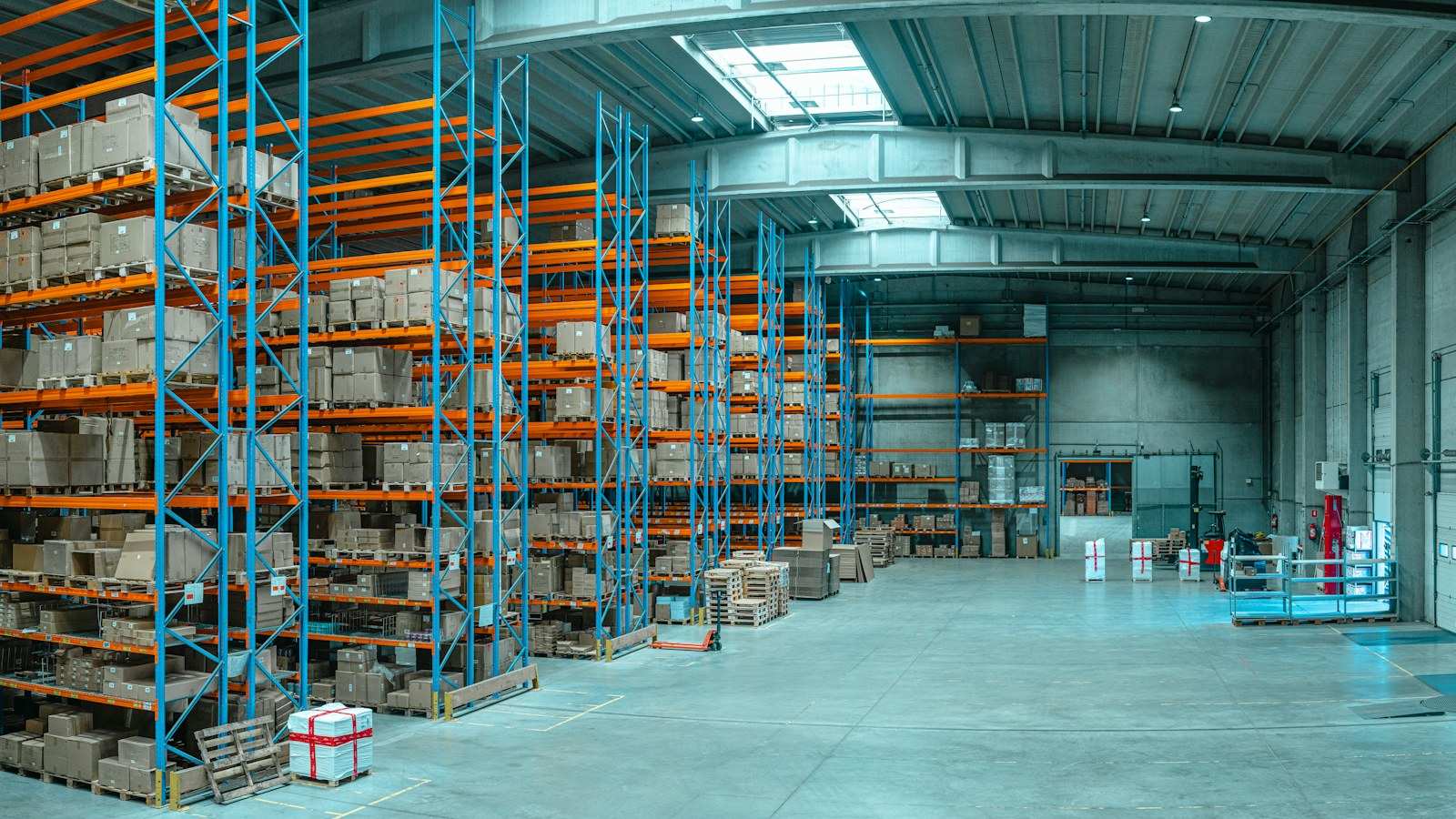
A foreign brand that sends inventory to an Amazon fulfilment centre in Italy has taken a VAT decision, whether it meant to or not. Once the goods sit in Italy, a sale to an Italian customer is an Italian supply.
Who charges the VAT, and whether you must register, depends on where the stock is and where your business is established, not on the Amazon store showing your listing.
This guide is for sellers established outside Italy, particularly outside the EU, and describes the rules in force on 24 November 2026. For the wider choice between selling remotely and incorporating, start with our guide to starting an e-commerce business in Italy as a foreigner.
Decision table: establishment, stock and customer
VAT registration or fiscal representation?
We handle VAT numbers, fiscal representation and the filings that follow. Describe the activity and where your customers are.
| Seller established | Stock location | Customer | VAT result in practice |
|---|---|---|---|
| Outside the EU | Italy only | Italian consumer | Amazon accounts for Italian VAT as deemed supplier; you still need an Italian VAT number for your exempt supply to Amazon, imports and stock records |
| Outside the EU | Italy only | Italian business | The deemed-supplier rule covers consumers only; the Italian customer reverse-charges under article 17(2), even if you are registered |
| Outside the EU | Pan-EU, Italy among storage countries | EU consumers | Registration in every enabled storage country; Amazon is deemed supplier for domestic and intra-EU consumer sales; warehouse transfers are reportable |
| Outside the EU | One country via EFN, e.g. Germany | Italian consumer | Intra-EU distance sale with Amazon as deemed supplier; registration in the storage country, generally not in Italy |
| One EU Member State | Italy only | Italian consumer | Domestic Italian supply: you charge Italian VAT and need an Italian VAT number; OSS cannot carry these sales |
| One EU Member State | Home country only, via EFN | Italian consumer | Intra-EU distance sale; the EUR 10,000 EU-wide threshold may apply; above it, Italian VAT through Union OSS or Italian registration |
| EU | Pan-EU including Italy | Any | Registration in every storage country; Union OSS for cross-border consumer sales; you remain responsible for the VAT |
Each row assumes goods already in free circulation in the EU and no Italian permanent establishment; the general framework is in our VAT decision guide for foreign companies.
Pan-EU, EFN and MCI: how each programme sets your VAT footprint
Amazon's Pan-European FBA page sets out the current requirements:
- Storage countries: Germany, France, Italy, Spain and Poland. You must enable at least two, by providing VAT registration numbers in those countries or through what Amazon calls COS.
- Required stores: listings with the same SKU in Germany, France, Italy, Spain and the Netherlands. Since 3 September 2026 every Pan-EU product needs an active offer in the Netherlands; from 26 February 2027 an active offer in Belgium will also be required at registration. The Swedish, Irish and Polish stores remain optional.
- Placement: once countries are enabled, Amazon "may then move your inventory between EU fulfilment centres at its own discretion and at any time".
- Fees: domestic FBA fees in storage countries, EFN cross-border fees elsewhere. The plan costs €39 a month excluding VAT, plus selling fees.
- UK: outside Pan-EU since 1 January 2021.
Amazon's rate card effective 2 November 2026 describes the other two models. Under EFN you send inventory to one local fulfilment centre and Amazon delivers to other EU stores for cross-border fees. Under Multi-Country Inventory (MCI) you send stock directly to fulfilment centres in other marketplaces and manage placement yourself; Amazon.nl does not participate.
| Programme | Who decides where stock sits | VAT numbers to expect |
|---|---|---|
| EFN | You: one storage country | Storage country; generally none in destination stores |
| MCI | You: each country you ship to | Every storage country |
| Pan-EU | Amazon, within the countries you enable | Every enabled storage country, at least two |
| CEP (German stock) | Amazon, across Germany, Poland and the Czech Republic | Germany, Poland and the Czech Republic |
The practical rule: you need an Italian VAT number when Italy becomes a storage country, by your choice (FBA Italy, MCI) or by your authorisation (Pan-EU with Italy enabled).
Italian VAT registration for foreign sellers
When Italian stock triggers it
The Agenzia delle Entrate's English registration guidance lists holding goods in Italy among the situations that require foreign operators to register. For FBA sellers three events usually arrive together: sales from Italian stock, the arrival of own goods from another Member State (an intra-Community acquisition in Italy under article 38(3)(b) of Decree-Law 331/1993), and imports where you are the importer. The number must exist before the first of them.
Which route applies
| Where you are established | Route |
|---|---|
| Another EU Member State | Direct identification under article 35-ter with form ANR/3, or a fiscal representative |
| United Kingdom | Direct identification is available: the Agenzia's Resolution 7/E/2021 relies on the UK–EU VAT assistance protocol |
| Other non-EU countries without a qualifying mutual-assistance instrument | Fiscal representative under article 17(3) |
Form ANR/3 goes to the Centro operativo di Pescara and must be filed before the first transaction relevant for Italian VAT. A fiscal representative is appointed by public deed, registered private instrument or a letter recorded at the Agenzia (article 1(4) of Presidential Decree 441/1997), and is jointly liable for your Italian VAT. That liability is why representatives ask for records, controls and security.
Non-EU, non-EEA businesses that carry out intra-Community transactions through a representative also owe a guarantee under article 35(7-quater) of the VAT decree. The ministerial decree of 4 December 2024 sets a minimum of €50,000 for at least 36 months. In our reading, a Pan-EU seller whose stock moves into and out of Italy falls within that perimeter, so budget for it early.
The registration itself carries no government fee, and the Agenzia publishes no processing deadline. Our guides to getting an Italian VAT number, how long registration takes and the fiscal representative cover the forms, timing and mandate.
If your setup combines several flows — Pan-EU, Amazon Business, your own website — book a free 30-minute call with an English-speaking commercialista, or email amministrazione@proclama.co with your configuration: we map each flow before you enable Italian storage. We reply in English, no obligation.
Amazon as deemed supplier: what it covers and what it leaves with you
Article 2-bis of the VAT decree, which implements article 14a of the VAT Directive, treats the platform as having bought and resold the goods in two cases. For goods already in the EU, it covers intra-EU distance sales and domestic consumer sales, only where the underlying seller is not established in the EU. For distance sales of imported goods in consignments up to €150, it applies wherever the seller is established. The Agenzia's Answer 51/2023 addresses the position of EU-established sellers, who stay outside the first case.
The Commission's Explanatory Notes on the VAT e-commerce rules (section 2.1.4) describe the mechanics. The single sale is split in two: a supply from you to Amazon, treated as a supply without transport, and a supply from Amazon to the customer.
For goods within the EU, your supply to Amazon is exempt with a right of deduction (articles 136a and 169(b) of the Directive). You must invoice it under the rules of the Member State where it takes place; self-billing may be used. In the Commission's domestic scenario (section 5.1, scenario 1a), a non-EU seller holding goods in a Member State "must register for VAT" there.
What the deemed-supplier rule does not remove:
- Registration in each storage country, for your supply to the platform and your stock movements.
- Your own B2B sales. The rule covers supplies to consumers. Italian business customers reverse-charge under article 17(2) even if you are registered (Answer 114/2023).
- Imports. Stock imported before the sale is not a distance sale of imported goods (Explanatory Notes, section 5.1), so the €150 import case does not reach FBA inventory. Import VAT and duties follow the importer of record; for the parcel model see our guide to dropshipping VAT, IOSS and customs.
- Input VAT. The right of deduction lets you recover Italian VAT on imports and local costs through Italian returns.
The EUR 10,000 threshold trap
The threshold in article 59c of the VAT Directive is an EU-wide €10,000, net of VAT, covering intra-EU distance sales of goods plus consumer telecommunications, broadcasting and electronic services, tested on the current and previous calendar year (Agenzia OSS FAQ).
Two conditions are routinely missed. The supplier must be established in only one Member State, so the Commission's OSS guidance excludes businesses established outside the EU, even with EU fixed establishments. And the goods must be dispatched from that Member State (Explanatory Notes, section 3.2).
Own-goods transfers between warehouses
Pan-EU moves your inventory without a customer order. Under article 17 of the VAT Directive, transferring business goods to another Member State is treated as a supply of goods, subject to listed exceptions. In Italy, the arrival is an intra-Community acquisition under article 38(3)(b) of Decree-Law 331/1993. Neither event is a distance sale.
A simple illustration: Amazon moves 100 units from Germany to Italy, and 30 are later sold to Italian consumers. That is three events: a transfer reported in Germany, an acquisition in Italy that needs the Italian VAT number in advance, and 30 domestic Italian sales, with Amazon as deemed supplier only if you are non-EU. The movement report matters as much as the sales report.
OSS: what it covers and what it never removes
The Union OSS lets a business declare in one Member State the VAT due on eligible cross-border consumer sales in the others. Its Italian legal basis in 2026 is article 74-sexies of the VAT decree; from 1 January 2027 it moves to article 150 of Legislative Decree 10/2026. Four limits matter for FBA, as the Agenzia OSS FAQ and the Explanatory Notes confirm:
- It is optional, but once used it covers every eligible sale, not selected countries.
- It does not replace the domestic VAT return or the obligations created by local stock.
- Your own direct sales from Italian stock to Italian consumers are domestic and cannot go through it. A deemed-supplier platform, by contrast, can declare its domestic consumer sales in the Union scheme (scenario 1a).
- Holding VAT numbers in other Member States does not prevent its use.
Italian SRL or foreign company with an Italian VAT number?
A VAT number is neither a company nor a permanent establishment. For income tax, article 162 of the TUIR applies until 31 December 2026, and the reorganised article 183 of Legislative Decree 117/2026 from 2027. It excludes facilities used solely for storage, display or delivery of the enterprise's goods if the activity is preparatory or auxiliary, and an anti-fragmentation rule stops connected functions being split.
Stock at an unrelated fulfilment provider, without a place at your disposal, is not by itself a fixed place of business. An Italian team, your own warehouse or a 3PL space you control changes the facts; our permanent establishment guide works through them.
An SRL is worth considering when the Italian business becomes operational: staff, premises, Italian contracts, or partners and banks expecting a local entity. It is a separate legal person whose debts are met from its own assets (article 2462 of the Civil Code), with share capital from €1 under article 2463.
One consequence is often missed. An Italian SRL is EU-established, so Amazon is not its deemed supplier: the SRL charges VAT on its consumer sales and uses OSS for cross-border ones. Compare the structures in our branch versus subsidiary guide; the formation documents guide and the bank account guide for non-resident founders cover the practical steps.
Monthly reconciliation checklist
- Orders and refunds split by dispatch country, delivery country, customer type and whether Amazon acted as deemed supplier.
- Inventory movements from Amazon's Cross-Border Inventory Movement, Daily Inventory History and Amazon Fulfilled Shipments reports, matched to intra-EU listings and Italian acquisitions.
- Invoices for your supply to Amazon, including self-billed ones, where Amazon is deemed supplier.
- Amazon service invoices. Fees are a separate B2B purchase. An Italian SRL buying services from a non-resident supplier integrates the invoice with document type TD17 (Agenzia invoicing guide).
- Payouts. Net settlements are not sales: rebuild gross sales, fees, refunds and reimbursements.
- Imports: customs declarations, import VAT and the importer of record for each inbound shipment.
What it costs
| Item | Amount | Source and caveat |
|---|---|---|
| Amazon selling plan | €39 a month excl. VAT, plus selling fees | Amazon Pan-EU page |
| Referral fees | By category; most between 8% and 15% | Amazon rate card, 2 November 2026 |
| FBA fulfilment and storage | By size, weight and destination; EFN cross-border fees exceed domestic ones | Amazon rate card |
| Fuel and logistics surcharge | 2% of FBA fees from 2 November 2026, up from 1.5% | Amazon Pan-EU page |
| German stock outside CEP | €0.26 extra per unit shipped from German centres (€0.27 on Amazon.fr) | Amazon rate card |
| Italian VAT number | No government fee | Agenzia forms; professional help is extra |
| Fiscal representative | No statutory tariff; low-volume mandates are often budgeted in the low thousands of euros a year | Planning estimate only; quotes vary with volume |
| Guarantee, non-EU/EEA with intra-EU operations | Minimum €50,000, at least 36 months | Ministerial decree of 4 December 2024 |
| SRL statutory floor | About €537 to €557 a year before invoice stamp duty | Our annual running costs guide |
| SRL accounting | From €3,850 a year excl. VAT for revenue up to €75,000, up to 600 entries, no employees | Published starting point; higher order volumes change the profile |
To keep the Italian VAT position, the Amazon reconciliation and the filings with one English-speaking team, see our accounting and tax service. Prefer email? Write to amministrazione@proclama.co — we reply in English.
Frequently asked questions
Do I need an Italian VAT number to sell on Amazon.it?
Only if your goods are stored in Italy, or you import or acquire them there. Selling on Amazon.it from stock held in another Member State through EFN generally does not require an Italian number for the destination store. FBA Italy, MCI to Italy and Pan-EU with Italy enabled all do.
Does Amazon charge and pay the Italian VAT for me?
For consumer sales of goods already in the EU, only if you are established outside the EU; Amazon is then the deemed supplier under article 2-bis. EU-established sellers keep the VAT obligation, and every seller keeps its B2B sales, stock transfers and imports.
Why register if Amazon is the deemed supplier?
Because your supply to Amazon takes place where the goods are. The Commission treats it as exempt with a right of deduction and states that a non-EU seller holding goods in a Member State must register there. The registration also carries your imports, transfers and input VAT recovery.
Can a US or UK company use the €10,000 threshold?
No. The threshold requires establishment in a single EU Member State and dispatch from that state, so businesses established outside the EU cannot use it, even with EU fixed establishments. Goods in Italian warehouses are domestic supplies anyway, so plan for Italian VAT from the first sale.
Is an Italian fiscal representative mandatory?
For non-EU sellers without a qualifying mutual-assistance instrument, yes, once Italian VAT obligations exist. EU sellers can identify directly with form ANR/3, and the Agenzia allows UK-established businesses to do the same. The representative is jointly liable for your Italian VAT.
Are Pan-EU transfers sales?
Not to a customer, but they are VAT events. Article 17 of the Directive treats a transfer of own goods to another Member State as a supply, and the arrival is an acquisition in the destination state. Each needs registration and reporting even though no customer is involved.
Does an Amazon warehouse in Italy create a permanent establishment?
Not automatically. Article 162 TUIR excludes storage and delivery facilities if the activity is preparatory or auxiliary, subject to anti-fragmentation. Third-party storage without a place at your disposal is not by itself a fixed place; Italian staff or your own warehouse change the analysis.
Do I need an Italian company to use FBA in Italy?
No. A foreign company can register for Italian VAT directly or through a representative. An SRL suits an operating Italian presence. Being EU-established, it also charges VAT on its consumer sales itself, because Amazon is not its deemed supplier.
Primary sources
- Amazon, Pan-European FBA programme page (Italian version: Logistica di Amazon Europa) and FBA rate card effective 2 November 2026.
- Presidential Decree 633/1972, articles 2-bis, 7-bis, 17 and 35-ter.
- Directive 2006/112/EC, consolidated text, articles 14a, 17, 59c, 136a and 169.
- European Commission, Explanatory Notes on the VAT e-commerce rules, sections 2.1.4, 3.2 and 5.1; Commission OSS guidance.
- Decree-Law 331/1993, article 38.
- Agenzia delle Entrate, VAT registration in Italy, form ANR/3 and OSS FAQ.
- Agenzia delle Entrate, Resolution 7/E/2021, Answer 51/2023 and Answer 114/2023.
- Presidential Decree 441/1997, article 1(4); Ministerial decree of 4 December 2024.
- Agenzia delle Entrate, guide to e-invoicing and the esterometro, April 2025.
- TUIR, article 162, version at 27 October 2026; Legislative Decree 117/2026; Legislative Decree 10/2026.
- Civil Code, article 2462 and article 2463.
Related guides
- Start an e-commerce business in Italy as a foreigner
- E-invoicing and Receipts for E-commerce in Italy (2026)
- Dropshipping to Italy: VAT, IOSS and Customs (2026 Guide)
- Start an E-commerce Business in Italy as a Foreigner (2026)
- Closing an Italian Subsidiary: SRL Liquidation and Branch Closure (2026)
- Selling into Italy as a Foreign Company: VAT on Goods and Services (2026)